Beyond Coloring Pages: Teapot Fairy House Graphics for Branding
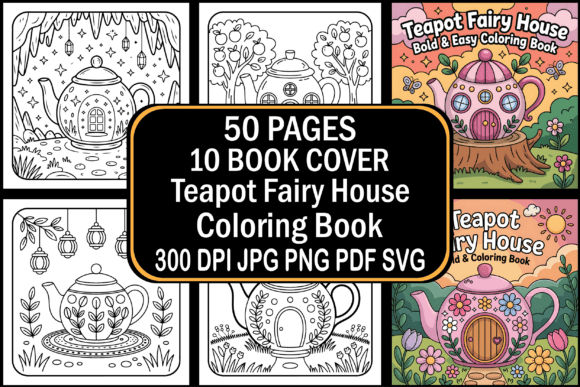
When a client approached me with a vision for a new line of botanical teas, we needed a brand identity that whispered enchantment. The core product was premium loose-leaf tea, but the brand story needed to be about cozy moments, imaginative escapes, and a touch of whimsical charm. That’s when I began evaluating the Teapot Fairy House Coloring Book bundle as a potential foundational graphic design asset. This isn’t just a collection of coloring pages; it’s a reservoir of illustrative motifs ready for commercial design.
First Impressions: Crafting a Whimsical, Handmade Mood
My immediate impression was one of intricate, friendly storytelling. Each teapot transformed into a miniature dwelling suggests a brand personality that is handmade, organic, playful, and deeply decorative. It leans feminine but not exclusively; it’s more about universal nostalgia and comfort. This style wouldn’t suit a stark, minimalist tech brand, but for businesses rooted in craft, nature, and storytelling—like a specialty bakery, an artisan candle brand, a children’s boutique, or, as in my case, a boutique tea company—it establishes an instant emotional tone. It feels premium through its detail, not through austerity.
From Digital Bundle to Physical Brand Touchpoints
The true test of any design asset is its application across real-world materials. Here’s how the Teapot Fairy House Coloring Book illustrations can transition from digital product to tangible brand identity.
- Product Labels & Packaging Accents: Individual fairy house illustrations become stunning focal points on tea tin labels, soap wrappers, or honey jar stickers. Their detailed borders can frame product names.
- Brand Stationery & Collateral: Simplified elements from the pages work beautifully on thank-you cards, business cards for a florist or home decor shop, and hang tags for handmade goods, reinforcing a consistent brand identity.
- Promotional & Social Media Graphics: These assets are ready-made for social media campaign graphics, website banners announcing a new seasonal blend, or flyers for a local café’s fairy-themed afternoon tea event.
- Environmental & Retail Graphics: Larger, more complex scenes could be adapted for menu graphics, price lists in a boutique, or even as decorative murals or window displays to create an immersive in-store experience.
Strengthening Business Presentation Through Consistent Imagery
Using a cohesive set of illustrations like this bundle directly impacts several key areas of small business branding.
- Better Product Recognition & Shelf Appeal: A unique, recurring motif on your packaging makes your product stand out in a crowded marketplace, whether online or in a physical shop.
- Stronger Emotional Connection & Customer Trust: This particular style evokes warmth and care, suggesting a business that values detail and story, which builds trust with customers seeking authenticity.
- More Professional & Polished Marketing Visuals: Instead of piecing together disparate clipart, a unified bundle allows for a professional, editorial design feel across all touchpoints, from product mockups to promotional ads.
Where These Fairy House Graphics Shine Brightest
Based on the intricate and thematic nature of these assets, they will deliver maximum value in specific applications.
- As Hero Graphics on Product Packaging: Centered on a label or box, they command attention and tell the product’s story instantly.
- As Decorative Brand Elements: Used as subtle patterns on the back of a business card or as a watermark on a website footer.
- For Seasonal Campaign Visuals: Perfect for autumn harvest or spring garden promotions for a food brand or florist.
- On Boutique Visuals & Thank-You Inserts: Elevating the unboxing experience or in-store signage with a touch of illustrated charm.
Practical Considerations for Professional Use
As a brand designer working with real clients, I must also note where such decorative assets require careful application.
- Formal Corporate or Luxury Minimalist Brands: This style is inherently decorative and may clash with brands aiming for ultra-sleek or corporate seriousness.
- Very Small Labels or Crowded Layouts: The intricate details may become lost or muddy on tiny labels, especially if accompanied by extensive legal text or ingredient lists.
- Low-Contrast Backgrounds: Fine lines need clear contrast; placing them on busy or similarly toned backgrounds will reduce legibility and impact.
- Confirm Commercial Licensing: Essential for any use in client work, physical product sales, or business branding.
- Test on Real Packaging Mockups: Print a sample label at actual size to judge scale and detail clarity.
- Preview on Small Labels & Check Black/White Usage: Ensure the asset retains character even when scaled down or used in single-color printing.
- Test with Brand Color Palettes: See how the illustrations interact with your client’s primary and secondary colors.
- Compare with Competitor Packaging: Does this visual direction differentiate the brand effectively?
- Review File Formats for Editability: If SVG or vector files are included, they allow for color changes and adaptation, which is invaluable for custom branding.
- Test Typography Pairings: Place illustrations beside serif, sans-serif, script, and display fonts to find a harmonious balance where decoration supports, not competes with, crucial text.
A Designer’s Checklist Before Client Implementation
Before integrating the Teapot Fairy House Coloring Book into a live brand project, I run through this practical list.
Ultimately, the Teapot Fairy House Coloring Book bundle transcends its original category. For the creative entrepreneur, the local shop owner, or the brand designer crafting a tangible story, it offers a rich library of whimsical, brand-ready illustrations. When applied thoughtfully across packaging design, promotional material, and the entire brand identity, it can transform a simple product into an experience, building that cherished, consistent, and professional visual narrative that customers remember and trust.