A Designer's Honest Take on Bold Autumn Coloring Pages
The First Impression: Seasonal Charm Made for Stitching
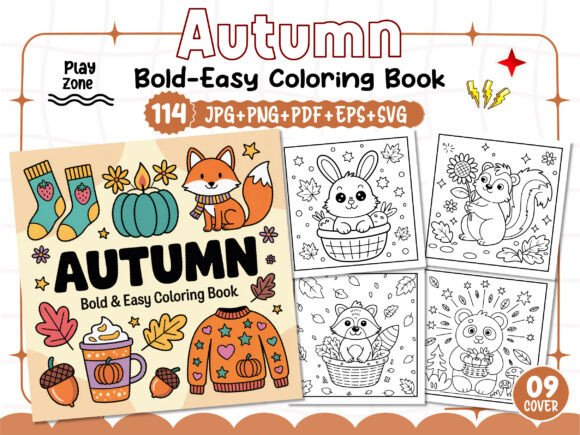
Opening the Bold and Easy Autumn Coloring Pages, my immediate thought was: this is a mood, not just a motif. The designs have a confident, graphic quality. The lines are thick and clear, a blessing for embroidery. The themes—leaves, pumpkins, cozy scenes—feel warmly familiar but presented with a crisp, modern personality. As a designer, I see shapes that will translate beautifully into satin stitch borders and clean fill stitch areas. It doesn’t feel delicate or finicky; it feels built for making a statement on a product.
Where This Design Naturally Belongs
In my hands, these pages aren't just for coloring; they’re blueprints for products. I envision them on a heavyweight cotton tote bag—a perfect item for a craft fair. The bold outlines would create a crisp, high-contrast embroidered tote bag design that holds up against daily use. I also picture a single, large pumpkin motif centered on a chunky knit pillow cover for a boutique home decor line. The layout is straightforward, making it ideal for a focal point on apparel like a sweatshirt embroidery or the front of a child’s apron. These aren't subtle accents; they’re the main event.
A Real Scenario: Crafting a Boutique Autumn Tote
Let’s walk through a real case. I’m preparing a custom tote as a featured item for my small shop this October. I choose a leaf design from this set. The thick lines mean I can plan a combination of a satin stitch for the stem and a denser fill stitch for the leaf body without worrying about tiny, collapsing details. On my screen, I’m already thinking about thread colors—a burnt orange for the fill, a dark brown for the outline. The final product will look clean, professional, and unmistakably autumn. It’s a design that builds customer trust because the finished embroidery will look intentional and well-made.
Performance on Real Products: Strengths and Considerations
For machine embroidery design application, the bold nature of these graphics is a significant advantage. On custom apparel like t-shirts and sweatshirts, the clarity will remain even on slightly textured fabrics. For baby embroidery on a blanket or nursery decor, the friendly, recognizable shapes are perfect. As an embroidered patch, these designs would be exceptionally clear and easy to produce. They lend themselves to holiday embroidery projects for gifts and personalized products.
However, their boldness requires some practical thought. On very small hoop sizes, some of the larger, sweeping shapes might need scaling down carefully to ensure the stitch density doesn’t become too high and stiffen the fabric. On thin or stretchy fabric, like a lightweight tee, using a proper stabilizer is crucial to prevent puckering around those solid fill areas. I wouldn’t recommend trying to miniaturize them for a tiny corner of a cap; they deserve space. The good news? On dark fabric, with bright thread choices, they’ll pop beautifully.
Affecting Your Product’s Appeal and Value
Using a design like this directly impacts your handmade presentation. It feels contemporary and approachable, which boosts buyer engagement in an Etsy listing or at a craft fair. It supports brand consistency for a shop focused on seasonal, graphic goods. As a personalized gift, say an apron with a custom-embroidered autumn scene, it has high giftability—it’s cheerful and recognizable. For commercial embroidery projects, such as producing a line of kitchen towels for a local boutique, the designs provide a strong, cohesive visual theme that looks professional.
Careful Points for Commercial Use
If you’re a digital product seller using these as part of design assets for printable mockups, the high-resolution aspect is key. But for those selling the finished embroidered product, the most critical step is confirming the licensing. The product description mentions it’s for KDP interior, but as an embroidery designer, I must stress: always check the specific license terms before selling physical items or derived digital embroidery files. Never assume.
Practical Notes from the Embroidery Hoop
Before committing to a client project or a batch of small shop merchandise, here is my standard practice advice for using such a design:
- Test on scrap fabric first. Use the same material and weight as your final product.
- Check thread color contrast against your fabric background—do a quick stitch-out of a key section.
- Review the stitch density in your embroidery file software; adjust if the fills seem too dense for your fabric.
- Confirm your hoop size can accommodate the design at your desired scale without forcing awkward splits.
- Inspect small details like the corners of leaves or pumpkin stems to ensure they’ll stitch out cleanly.
- Test the design in a black and white mockup to judge its form without color influence.
- Compare light and dark fabric backgrounds in your planning; the design’s bold lines work on both, but your thread palette will change.
- Always use the correct stabilizer for your project; it’s the foundation of a clean finish.
- Finally, ask yourself: does this embroidery project feel right for my personal use, or does it have the commercial appeal for my business? The Bold and Easy Autumn Coloring Pages lean toward the latter—they are ready for product-making.
The Final Stitch: A Design Ready for Making
Evaluating the Bold and Easy Autumn Coloring Pages from the point of view of an embroidery designer, I see a set of graphics that has moved past the screen and into the realm of physical potential. It creates a mood of cozy, graphic autumn that customers will connect with. It performs best on products where it can be a bold, central statement. With practical precautions regarding scale, fabric, and licensing, it can become the foundation of a beautiful finished product—a custom apparel item, a holiday gift, or a line of boutique merchandise. It’s not a delicate blueprint; it’s a confident one. And in the world of handmade, confidence stitches well.